
- Most problems are repairable: A damaged module, power supply, or connection can often be replaced without replacing the entire display.
- Match matters: Properly matched replacement modules and calibration help maintain even color and brightness.
- Outdoor protection is essential: Cabinet construction, sealing, drainage, and the right weather rating matter in Michigan’s changing climate.
- Professional service is safer: LED displays contain electrical components and should be inspected by qualified personnel.
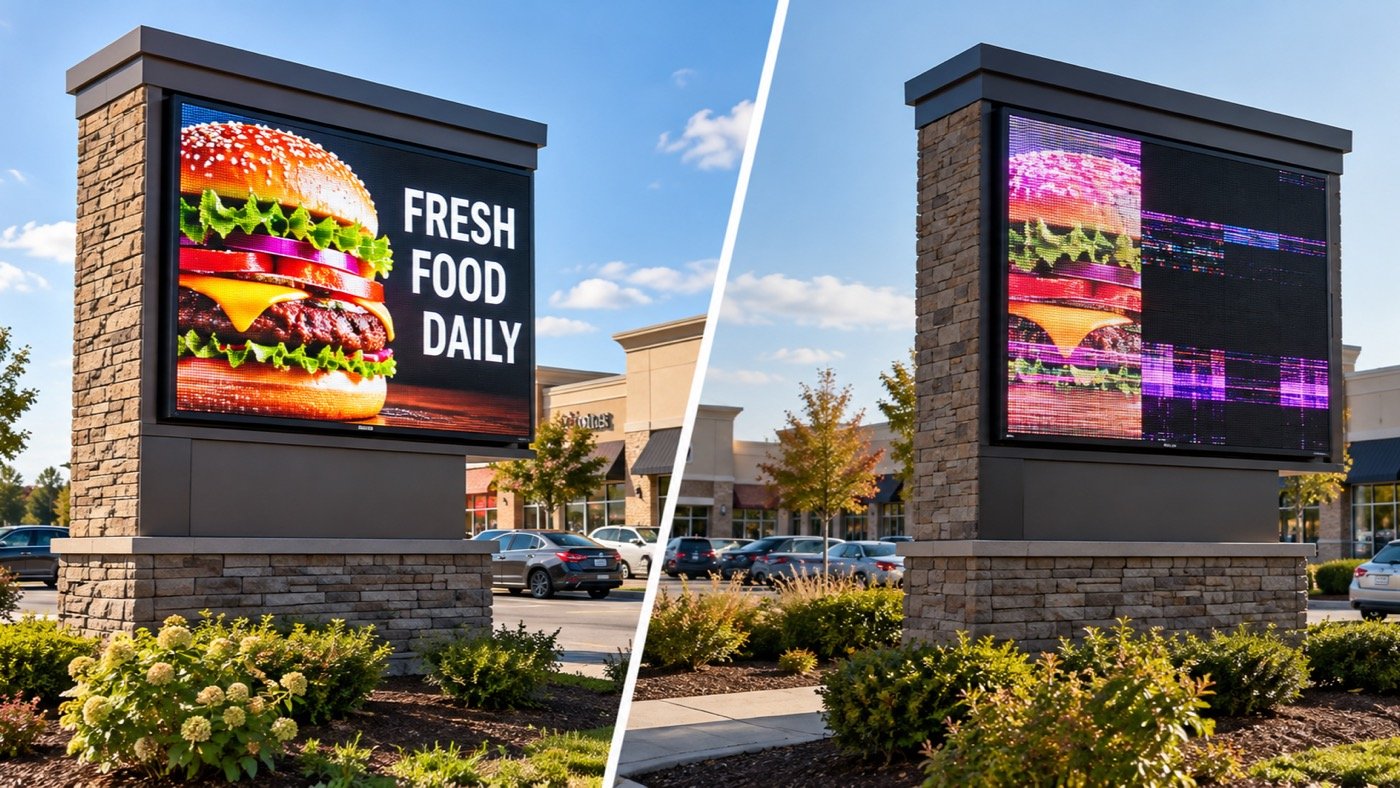
Commercial LED displays are designed for years of reliable operation, but like any electronic equipment, problems can develop over time.
Dead pixels, uneven colors, flickering, and power failures are among the most common issues businesses encounter. Some problems result from normal wear, while others can be traced to component quality, environmental exposure, or installation conditions.
Understanding these issues can help you choose a better display, prevent avoidable failures, and recognize when professional LED screen troubleshooting is needed.
1. Dead Pixels and Dark Sections
What happens?
Individual pixels stop illuminating, horizontal or vertical lines appear, or entire sections of the LED display go dark.
Why does it happen?
Common causes include damaged LED modules, failed electronic components, loose connections, or electrical issues. Outdoor displays may also experience damage from physical impact or harsh environmental conditions.
Choose commercial-grade LED displays with quality components and appropriate protection for their installation environment. Professional installation and access to replacement modules can also make future repairs easier and faster.
2. Uneven Colors and Brightness
What happens?
Some sections of the display appear brighter, darker, or slightly different in color than others. This is particularly noticeable when a damaged LED module is replaced and the new section does not match the surrounding screen.
Why does it happen?
LEDs gradually change in brightness over time. Manufacturing differences between LED batches can also create visible color variations.
Choose a supplier that provides properly matched replacement modules and supports display calibration. Modern LED control systems can help adjust brightness and color consistency, although matching older modules perfectly is not always possible.
3. Water Damage and Michigan Weather
What happens?
Moisture enters an outdoor LED display, potentially causing dark sections, intermittent operation, corrosion, or electrical failures.
Why does it happen?
Damaged seals, inadequate weather protection, or improper installation can allow water to reach sensitive electronic components. Michigan’s rain, snow, freezing temperatures, and repeated freeze-thaw cycles make proper weather protection particularly important.
Look for outdoor LED displays with appropriate weather protection, such as IP65 or IP66 ratings, depending on the application. Proper cabinet construction, installation, sealing, and drainage are essential for long-term reliability.
4. Flickering and Camera Lines
What happens?
An LED display may look normal in person but show moving horizontal lines or flickering when recorded with a smartphone or camera. In other cases, visible flickering may indicate a display or electrical problem.
Why does it happen?
Camera-related flicker often results from the interaction between the display’s refresh characteristics and the camera’s shutter settings. Visible flickering may have different causes, including power or control-system issues.
For applications where customers frequently record videos, choose an LED display with a high refresh rate. Commercial LED displays commonly offer 3,840 Hz refresh rates, with 7,680 Hz available on selected systems. The right configuration can significantly improve camera performance, although camera settings also influence the final result.
5. Power Supply Failures and Overheating
What happens?
An LED display shuts down unexpectedly, operates intermittently, or experiences repeated failures in certain sections.
Why does it happen?
Potential causes include aging power supplies, excessive internal temperatures, poor ventilation, electrical problems, or overloaded components. Outdoor displays exposed to direct sunlight can experience particularly demanding operating conditions.
Choose displays with reliable power supplies, effective heat management, and properly designed electrical systems. Professional installation and appropriate environmental protection can help reduce the likelihood of premature failures.
Troubleshooting: Common Symptoms
Not every LED display problem requires replacing the entire screen. The table below highlights common symptoms and possible causes.
| Problem | Possible Cause | Recommended Action |
|---|---|---|
| Individual dead pixels | Damaged LEDs or module components | Have the affected module inspected |
| Entire section is dark | Power, connection, or module failure | Schedule professional diagnostics |
| Different colors between sections | Aging or mismatched replacement modules | Check module compatibility and calibration |
| Flickering or flashing | Power supply, controller, or connection issue | Inspect the system professionally |
| Water inside the display | Failed seals or weather protection | Arrange service before further damage occurs |
| Display shuts down unexpectedly | Power or temperature-related issue | Have the electrical and cooling systems checked |
Important: LED displays contain electrical components and should be inspected or repaired by qualified personnel. Avoid opening cabinets or working on energized equipment without appropriate training.
When Should You Repair or Replace an LED Display?
Not every problem means you need a new LED display. In many cases, replacing a damaged module, power supply, or other component can restore normal operation.
However, replacement may be worth considering when:
- The display experiences frequent failures or requires repeated service.
- Replacement parts are difficult to obtain.
- Multiple sections show significant brightness or color deterioration.
- The display uses outdated technology with poor image quality.
- Repair costs are becoming substantial compared with the value of a new system.
A professional assessment can help determine whether repairing your existing LED display or upgrading to newer technology makes better financial sense.
How PixaClear LED Helps Prevent Common LED Display Problems
- Modern LED Technology: Commercial LED displays with high-quality components, advanced control systems, and options designed for indoor and outdoor environments.
- Professional Installation: Our team provides professional installation and setup for your LED display.
- Industry-Leading Warranties: Our transparent LED displays include a 3-year warranty, indoor and outdoor LED displays include a 5-year warranty, and qualifying digital billboards can include up to 7 years of coverage.
- Reliable Service: Michigan-based assistance for troubleshooting, maintenance, and display repairs.
- Lifetime Technical Support: Ongoing technical assistance for your PixaClear LED display and control system.
Ready for a More Reliable LED Display?
Avoid common LED display problems by choosing quality technology, professional installation, and dependable long-term support.
PixaClear LED provides commercial LED displays with industry-leading warranties and lifetime technical support throughout the Detroit area and across Michigan.
Get a Free Quote Explore Our LED Displays